Regional Utility Menu
  • adl.org
  • Find Your Local ADL
  • Report an Incident
Southeast Social Links Header
  • Twitter
  • Facebook
  • LinkedIn
  • Youtube
  • Instagram
  • About
  • Get Involved
Donate
Donate
  • About
  • Get Involved
Regional Utility Menu
  • adl.org
  • Find Your Local ADL
  • Report an Incident
Southeast Social Links Header
  • Twitter
  • Facebook
  • LinkedIn
  • Youtube
  • Instagram

Research & Analysis

The fight against hate never rests. Get the latest up-to-date analysis on current events 
related to our work battling hate and extremism.

Filters

Topic

  • Ability, Disability & Ableism
  • Anti-Bias Education
  • Anti-Israel Activity
  • Antisemitism Globally
  • Antisemitism in the US
  • Bias, Discrimination & Hate
  • Bullying & Cyberbullying Prevention
    • Being an Ally
    • Bullying
    • Identity-Based Bullying
  • Criminal Justice Reform
  • Education
  • Extremism, Hate or Terrorism
    • Extremism
  • Free Speech
  • Hate Crimes
  • Israel
  • Jewish Culture & Antisemitism
    • Antisemitism
    • Biography & History
    • Jewish Culture
  • Law Enforcement & Security
  • LGBTQ+
  • Online Hate & Harassment
  • People & Culture
    • Arab and Arab-American
    • Asian/Asian-American/South Asian/South-Asian American/Pacific Islander
    • Black, African American, Caribbean
    • Latino/Hispanic, Latino-American, Hispanic-American
    • Native American & Indigenous People
  • Race & Racism
    • Biography & History
    • Racism
  • Racial Justice
  • Religion & Religious Bigotry
    • Christian
    • Hindu
    • Interfaith
    • Judaism
    • Muslim/Muslim-American
  • Religious Freedom
  • Social Justice
  • Voting Rights
  • Women’s Equity

Type

  • Action Guide
  • Article
  • Backgrounder
  • Event
  • Fact Sheet
  • Hate Symbol
  • Lesson Plan
  • Letter
  • Media Watch
  • News
  • Podcast
  • Press Release
  • Profile
  • Report
  • (-) Tools and Strategies
  • Webinar

Date

Filters

Sort

203 Results

Back

5 Things to Know about the Jewish High Holidays

Tools and Strategies
Apples and Honey on a table
For Educators | For Parents, Families, and Caregivers Rosh Hashanah and Yom Kippur, the High Holidays, are celebrated by Jewish people all over the world. The High Holidays fall on different days each year. For the specific dates each year, check our Calendar of Observances. These and other Jewish holidays fall on different days in our calendar because they follow the Jewish calendar, which has a different number of days than our calendar. The Jewish calendar is a Soli-lunar calendar.&nbsp…
June 06, 2017
Read more about 5 Things to Know about the Jewish High Holidays

What Bullying Is and Is Not (In English and en Español)

Tools and Strategies
Combating Bullying and Cyber Bullying
Table Talk: Family Conversations About Current EventsBullying is a phrase we hear regularly and often: in the media, on TV shows and movies, in schools and in conversations among both adults and children. Parents, students and schools are rightfully worried about bullying. It is a problem and cause for concern but may not be as widespread as many think because the term “bullying” is often used as an umbrella to describe all kinds of mean behavior—from a rude comment to a…
May 09, 2017
Read more about What Bullying Is and Is Not (In English and en Español)

Risk Factor: The Truth about Dares

Tools and Strategies
Skydiving
Rosalind's Classroom Conversations, March 2017 For Educators By Rosalind Wiseman “I dare you…”   Who doesn’t remember that from adolescence? At Cultures of Dignity, we’ve been thinking a lot about what it means to take a risk because taking one can be a great learning experience. And then a mom asked us these really good questions: I dare you to hold your breath, which can lead to the choking game. I dare you to chug this, take this pill, drink…
March 31, 2017
Read more about Risk Factor: The Truth about Dares

Hate Symbols (In English and en Español)

Tools and Strategies
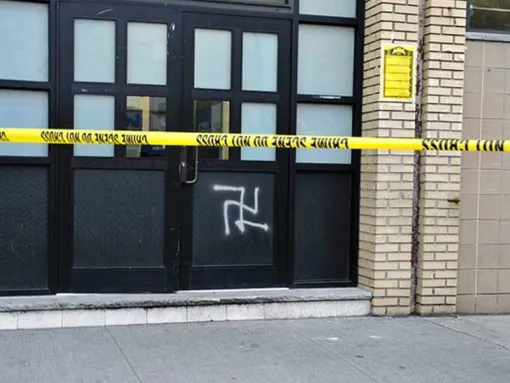
Swastika Brooklyn
Table Talk: Family Conversations About Current Events For Parents, Families, and Caregivers | 13 and upTopic Summary We see symbols every day in all aspects of our lives. Symbols are used to convey ideas, qualities, emotions, material objects/products, opinions and beliefs. Unfortunately, symbols are also used to convey hate and bias. Lately, we have seen a lot of hate symbol graffiti in public spaces and specifically the swastika, which in most circumstances is understood as an expression…
March 13, 2017
Read more about Hate Symbols (In English and en Español)

Distribution of Religious Materials and Proselytizing by Outside Groups and Individuals

Tools and Strategies
For Educators Individuals, including parents, and groups who have no formal relationship to a school (Third Parties) may distribute religious materials, including Bibles, to students outside of school premises. They may also discuss religious matters with students. Third-party materials or publications of a religious viewpoint may be distributed on- campus to the same extent distribution of third-party secular materials is permitted. However, courts have applied different rules to…
March 05, 2017
Read more about Distribution of Religious Materials and Proselytizing by Outside Groups and Individuals

Release Time Programs

Tools and Strategies
For Educators Release time in the public schools refers to programs in which students are released from school early to attend religious classes off school premises. Participating students must have permission from their parents. Nonparticipating students remain in school. Such programs may be constitutional if the religious classes take place off school grounds, if no public school funds are expended, and if school officials or teachers do not promote program attendance through coercion or…
March 04, 2017
Read more about Release Time Programs

10 Ways Youth Can Engage in Activism

Tools and Strategies
Dream Activist
For Educators Our country has a long history of youth-led movements that brought about significant social change. Young people have advocated for child labor laws, voting rights, civil rights, school desegregation, immigration reform and LGBTQ+ rights. Through their actions, the world has changed. Because young people often have the desire, energy and idealism to do something about the injustice they see in the world, they are powerful agents for change. Our work in education helps…
January 17, 2017
Read more about 10 Ways Youth Can Engage in Activism

Can We Talk? Tips for Respectful Conversations in Schools, Workplaces and Communities

Tools and Strategies
Emotional Asian Woman Talks in a Group
Being able to have respectful and constructive conversations is the bedrock of any relationship—whether those connections take place at home, school, work or in communities. However, when controversy or conflict arises, the discussions can quickly become polarized, heated and personal, making it very difficult to have a conversation where different points of view are aired and discussed. These conversations can be about something controversial like politics, current events, moral…
January 01, 2017
Read more about Can We Talk? Tips for Respectful Conversations in Schools, Workplaces and Communities

Let's Talk Politics: Bias, Dialogue and Critical Thinking

Tools and Strategies
Vote Election Diverse Voters Sitting
Teachers may want to engage young people in conversations about presidential and other elections and provide opportunities for students to learn more, ask questions and understand what they see and hear. Below are tips and strategies for engaging in these potentially contentious conversations in the classroom and doing so with a critical thinking and anti-bias lens. These strategies can also be used with other controversial issues that arise in your classroom. It is critical that students…
September 09, 2016
Read more about Let's Talk Politics: Bias, Dialogue and Critical Thinking

11 Ways Schools Can Help Students Feel Safe in Challenging Times (In English and en Español)

Tools and Strategies
5th graders posing for a group shot in their classroom
In recent years, we have seen alarming images and biased language in schools and universities: name-calling, hate-filled taunts, vandalism, racial slurs and epithets, offensive graffiti on desks and bathroom walls. In addition, many young people—especially those whose identities have been targeted publicly with words and actions—are fearful and worried. Teachers have had to work overtime to console those students and provide resources to get help. Schools must be places where…
November 16, 2016
Read more about 11 Ways Schools Can Help Students Feel Safe in Challenging Times (In English and en Español)

6 Ways to Be an Ally (In English and en Español)

Tools and Strategies
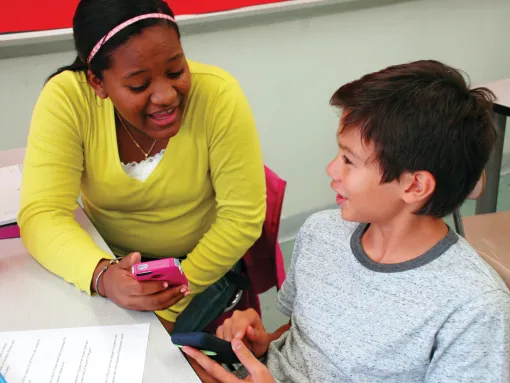
Female and Male Students Holding Cellphones Debating
For Educators | For Parents, Families, and Caregivers | For Students Here are some simple things you can do to be an ally to targets of name-calling and bullying. And remember—always think about your safety first when deciding the best way to respond. 1. Support targets, whether you know them or not.Show compassion and encouragement to those who are the targets of bullying behavior by asking if they’re okay, going with them to get help and letting them know you are there for them…
April 22, 2016
Read more about 6 Ways to Be an Ally (In English and en Español)

Finding the Balance: Countering Extremism and Combating Stereotypes

Tools and Strategies
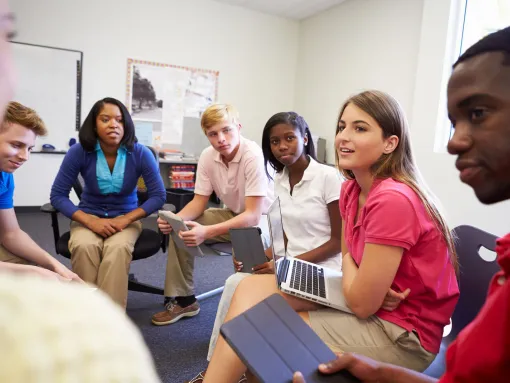
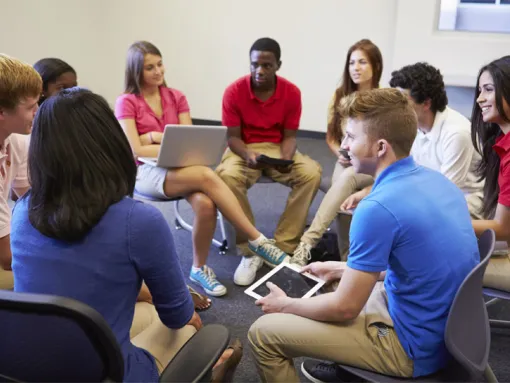
High School Students Group Discussion
Young people are exposed to discussions of extremism every day through social media, news and overheard conversations between adults. As an educators, the topic can be challenging to teach because the situation is always changing and evolving and worse--classroom conversations can themselves lead to stereotyping, bias and bigotry when discussing perpetrators, targets and victims.  The following resources will help you teach about extremism while ensuring that the…
April 18, 2016
Read more about Finding the Balance: Countering Extremism and Combating Stereotypes

Gun Violence and Mass Shootings

Tools and Strategies
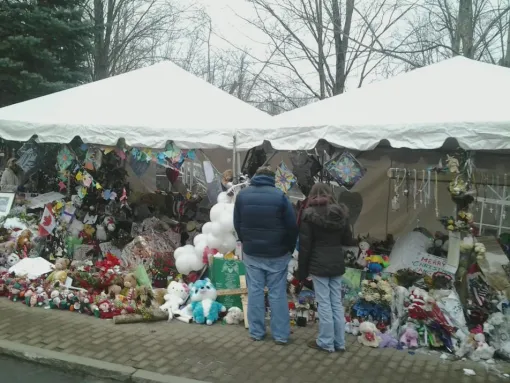
A Sandy Hook Elementary School makeshift memorial on Berkshire Road in Newtown, CT 12 days after shooting of 26 people who were killed, twenty were children.
Table Talk: Family Conversations About Current Events For Parents, Families, and Caregivers | 12 and up Talking with Children about Gun ViolenceThe issue of gun violence and mass shootings is in the news frequently. Young people are usually aware of what is happening and will want to talk about it. However, it is a sensitive, scary, and potentially painful topic. Before raising the matter with young people, consider your child’s personality. To what extent will the conversation…
November 11, 2015
Read more about Gun Violence and Mass Shootings

Recursos educativos en español

Tools and Strategies
Word web concept of learning Spanish
Para fomentar escuelas y aulas respetuosas, inclusivas y equitativas, es importante reconocer la lengua que hablan los alumnos y sus familias. Esas lenguas reflejan y afirman su origen étnico, su cultura y su herencia. Según datos recientes del Censo, 63,7 millones de personas (o el 19,1% del total de la población) que viven en Estados Unidos se identifican como hispanos/latinoamericanos. Además, la mayoría de los hispanos (75%) afirman ser capaces de…
September 09, 2015
Read more about Recursos educativos en español

Tools for Advocacy

Tools and Strategies
Advocating to Elected Officials Advocating to the Media Advocating on Campus
September 01, 2016
Read more about Tools for Advocacy

Race Talk: Engaging Young People in Conversations about Race and Racism

Tools and Strategies
High School Students Taking Part in Group Discussion Circle
For Educators Because discussions of race and racism are part of our public discourse, educators feel a sense of responsibility to bring these topics into their classrooms—because young people want to be part of the conversation and should be.  If handled effectively, these discussions provide opportunities for timely learning. Below are suggestions and strategies for having classroom conversations with young people about race and racism. Prior to these discussions and…
July 22, 2015
Read more about Race Talk: Engaging Young People in Conversations about Race and Racism

Tools for Advocating to the Media

Tools and Strategies
Most Americans’ perceptions of the Middle East conflict come from the mass media.  Some media – especially large-circulation daily newspapers, network television and wire services – have correspondents based in Israel and continue to devote considerable attention to the Mideast.  This is not surprising considering the intensive U.S.involvement in the peace process, America’s substantial interests in the region, and the continuing strong ties between the U…
September 01, 2016
Read more about Tools for Advocating to the Media

Won't Discussing Differences Promote Prejudice?

Tools and Strategies
Early Childhood Question Corner For Educators | For Parents, Families, and Caregivers Many adults think that talking with children about our differences teaches prejudice. In Anti-Bias Curriculum, Louise Derman-Sparks (1989) debunks that myth and writes that talking about differences does not increase prejudice in children. Whether or not adults discuss differences with children, all children begin to notice differences among people as part of their natural development. It is the messages…
March 14, 2013
Read more about Won't Discussing Differences Promote Prejudice?

How Do I Create a Bias-Free Learning Environment?

Tools and Strategies
Early Childhood Question Corner For Educators | For Parents, Families, and Caregivers The early childhood program environment should look and feel welcoming for all children and should reflect the diverse world in which we live. In addition to being bright, colorful, safe and clean, it should include children’s artwork and show the diversity of the world through the program’s abundant supply of age-appropriate toys, dolls, books, magazines , pictures and musical instruments…
January 02, 2012
Read more about How Do I Create a Bias-Free Learning Environment?

Winter Holidays: December Dilemma or Teaching Opportunity?

Tools and Strategies
Candles in the Dark
For Educators | For Parents, Families, and Caregivers Winter is a festive time of year because so many holidays are celebrated by people from different religions, cultures and races. We spend time with family and friends, connect with our faith or culture, give and receive gifts and enjoy special foods and treats. However, this time of year—especially in schools and whether it's in-person, online or hybrid—can be a time where some children can feel uncomfortable, excluded, insulted…
November 06, 2014
Read more about Winter Holidays: December Dilemma or Teaching Opportunity?

Pagination

  • Previous page ‹ Previous
  • First page 1
  • …

  • Page 8
  • Page 9
  • Current page 10
  • Last page 11
  • Next page Next ›
Southeast Footer
  • About
  • Get Involved
  • News & Information
  • Contact
  • Report an Incident
  • Privacy Policy
  • Donate
  • Newsletter
Southeast Social Links Footer
  • Twitter
  • Facebook
  • LinkedIn
  • Youtube
  • Instagram