Join the ADL Innovation Lab and partner with ADL to equip students with digital literacy skills to combat online mis- and disinformation that lead to hate.
20 Results
Back
Disclaimer: This resource is not intended to provide and should not be construed as legal advice. Title VII and Legal Obligations for University DecisionsTenure and promotion decisions are employment actions subject to federal and state anti-discrimination laws. Universities must ensure that faculty evaluation, tenure, reappointment and promotion processes are fair, consistent and free from discrimination based on protected characteristics. Under Title VII of the Civil Rights Act of 1964,…

If you encounter antisemitism or biased content in your college or university classroom experiences, ADL is here to help. Campus Classroom Reporting is designed to help students and other members of campus communities identify and confidentially report concerns about antisemitism or biased content related to Jews and Israel in classroom settings, course materials, assignments, discussions, or faculty conduct. This resource provides guidance on what types of incidents should be reported, why…

PurposeThis guide helps you prepare and submit a clear report of antisemitism to your university. You do not need all details to report - share what you know now and add more later. Reminder: You do not need to determine whether an incident was antisemitic or otherwise discriminatory in order to report it. If something felt harmful, targeted, or affected your ability to learn, work, or participate in university life, you can and should report it. The university is responsible for assessing the…

A syllabus shapes how a course frames knowledge, discussion, and acceptable viewpoints. Reviewing it carefully can help identify whether a class supports open inquiry - or risks promoting bias, including antisemitism. Balance of Assigned ReadingsExamine the diversity of sources and viewpoints. Watch for: Readings that overwhelmingly present one political perspective Absence of Israeli, Jewish, or pluralistic scholarly voices in relevant syllabiUse of activist materials presented as…

Empower K-12 educators to advocate against antisemitism from colleagues, unions, or students. Create safe, inclusive school climates through direct advocacy.

Empower parents, caregivers and families of Jewish students with resources to proactively engage with school leaders and enhance student experiences.
ADL has been closely tracking how states are addressing antisemitism and supporting their Jewish communities. In 2024, ADL tabulated 9,354 antisemitic incidents across the United States – a 5% increase from 2023, a 344% increase over the past five years, and an 893% increase over the past decade. These numbers underscore the urgent need for state-level action. As highlighted in our first-of-its-kind Jewish Policy Index (JPI), our goal is to provide a tool that advocates, educators and…

A guide of best practices for school decision makers in their work to counter antisemitism in K-12 schools.

Table Talk: Family Conversations about Current EventsAll young people should be able to feel safe, included and respected in their classrooms and schools. Unfortunately, many do not. A recent study of high school students found that nearly four in ten students experienced identity-based bullying or bullying related to an aspect of their identity such as race, religion, sexual orientation, gender identity or physical appearance. How can we listen and learn from young people about…

Table Talk: Family Conversations about Current EventsYou may have heard about “swatting” because it's been in the news recently. What exactly is swatting? Why do people do it? Because young people are exposed to swatting online, on both mainstream websites and the “dark web” (i.e., hidden websites) and because some swatting incidents begin in online gaming or other digital platforms, it is an important topic to discuss with young people. Swatting is &ldquo…

Educators, use this online professional learning experience to help you explore best practices in responding to incidents of bias in schools.

There are many benefits to humor. A good joke can ease tension in a stressful situation. Humor can connect people and bring them together. Jokes can bring levity to a situation that begs for lightheartedness. Being funny can signal to others who you are. Humor can even open a conversation that previously felt closed or off-limits. However, jokes and humor, when they target social identity groups, can do the opposite. They can make people feel unsafe, disconnected, excluded and…

Build skills to recognize and address antisemitism by exploring Jewish identity and unpacking the
definition of antisemitism.
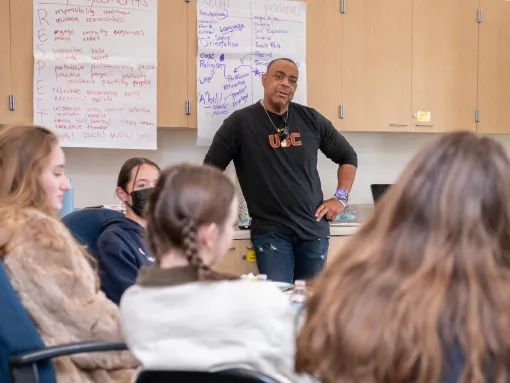
Learn helpful approaches educators can use to talk with young people about extremism and how to help young people resist and counter it.

Explore the difference and disconnect between intent and impact and why "impact" should be prioritized.

Short Online Experience to Learn about this Core Topic For Educators and Middle and High School Students About the Mini-LessonThe Pyramid of Hate is a powerful framework for understanding how bias escalates—from biased attitudes and stereotypes to discrimination, violence, and even genocide. Through the lens of antisemitism, this mini-lesson helps middle and high school students and educators explore how prejudice grows and intensifies over time, and provides practical strategies to…

Is your school experiencing a bias or hate incident?Whether it be a racist “joke,” slur, stereotype or some other form of implicit or explicit bias, school community members must be committed to addressing bias-related incidents in schools. Educators and school administrators play vital roles in creating an environment where all students can learn and thrive. Cultivating an equitable and inclusive school community requires ensuring that historically marginalized students are…

Table Talk: Family Conversations about Current Events For Parents, Families, and Caregivers Topic SummaryIt seems like we are seeing more and more news and social media stories about people experiencing bias as they go about their daily lives—riding the subway, shopping in a store, dining in a restaurant and hanging out with friends. Indeed, the surge of such stories makes it seem like racism, sexism, antisemitism and other forms of bias and discrimination are becoming more pervasive…

On a daily basis—in the lunchroom, at the grocery store, in school hallways, in our political rhetoric and even at home—people hear and sometimes use words and phrases that demean, ridicule, offend or show ignorance about people from different groups and backgrounds. Regardless of whether the comments are deliberately malicious, said because the person lacks knowledge, or thought to be "a joke," such words are harmful and not only impact those on the receiving end but also everyone…